| Lesson 3 | Issues and concerns |
| Objective | Outline and prioritize key issues and concerns an e-business architect must address. |
Issues and Concerns for an eBusiness Architect
As we have seen, an e-business solution must satisfy more than a technical requirement. It must support customers, internal teams, business partners, managers, and the larger enterprise. For this reason, the architect needs a clear way to identify and prioritize the issues that matter most. If those issues are not understood early, the solution may be technically impressive but strategically weak, difficult to operate, or poorly aligned with the needs of the business.
An e-business plan should therefore incorporate a set of core design concerns from the beginning. These concerns are not isolated checklist items. They interact with one another and often compete for time, budget, and attention. The architect must determine which concerns are foundational, which are operational, and which are likely to affect long-term success.
A practical starting list includes the following design issues:
- Customer focus
- Continual creation of value
- Transformation of business processes into digital form where appropriate
- Decentralized execution with centralized coordination
- Technical infrastructure and architectural fit
- Integration, growth, and change over time
These issues remain relevant in modern environments. Whether an organization is building a customer portal, exposing APIs for partners, extending services to mobile channels, or supporting cloud-enabled workflows, the architect must still ask the same core question: what design decisions will help the business operate more effectively through digital systems?
Why design is important in e-business
Design is important in e-business because users evaluate a digital system long before they understand its internal architecture. Customers, employees, and partners notice whether the experience is clear, credible, efficient, and trustworthy. If the information structure is confusing, navigation is inconsistent, or the business purpose is unclear, the user often interprets those problems as a sign that the organization itself is unreliable.
This is why information design and structural design matter so much. They influence usability, task completion, confidence, and overall satisfaction. Good architecture supports good design by ensuring that information is organized logically, that workflows are aligned with real tasks, and that the system reflects both business priorities and user expectations.
Information architecture is the structural design of an information space so people can understand content, complete tasks, and move through the system with confidence.
- Information architecture connects business goals to user experience
- It helps organize content, labels, navigation, and process flows in a way that supports real business outcomes.
- It improves usability by helping users find information and complete tasks more quickly.
- It reduces development and maintenance friction because the structure of the solution is clearer from the start.
- Design supports credibility
A digital business is judged not only by what it offers, but also by how clearly and consistently it presents that offer. Clear structure, quality content, and intuitive pathways make the organization appear more capable and more trustworthy. - Design affects measurable outcomes
Better structure can improve task completion, time on site, conversion, self-service success, support efficiency, and alignment between the interface and the underlying business process.
In modern e-business, this principle extends beyond websites. It applies to portals, dashboards, applications, APIs, onboarding flows, account-management tools, and any other digital touchpoint. The architect must therefore think about structure not only at the page level, but also at the process, data, and service level.
Purpose of the e-business solution
The most important question in any e-business design effort is also the one most often overlooked: What is the purpose of the solution? If the purpose is vague, the design cannot be evaluated properly. Teams may build features, connect systems, and deploy services without a clear basis for deciding whether the solution is successful.
Purpose is the foundation for every other architectural decision. It influences the choice of channels, the structure of workflows, the type of information needed, the scale of the infrastructure, the budget model, and the quality measures that matter most. A system designed to reduce support costs will not be judged by the same priorities as a system designed to improve partner integration, increase transaction volume, or support premium customer experiences.
The architect should therefore begin by clarifying the business objective in precise terms. Is the solution intended to sell, inform, automate, coordinate, personalize, integrate, or transform? In many cases, the answer includes more than one of these, but one purpose usually dominates. Without that clarity, the design drifts.

Addressing stakeholder concerns
A stakeholder is any person or group with a meaningful interest in the success, failure, operation, or outcome of the e-business solution. In a business setting, this usually includes customers, project sponsors, leadership, operations teams, developers, support staff, business units, suppliers, and external partners. Each stakeholder group evaluates the solution from a different perspective.
Customers may care most about convenience, speed, trust, and clarity. Business sponsors may focus on return on investment, market position, and delivery risk. Operations teams may be concerned with reliability, maintainability, and supportability. Developers may focus on system complexity, integration boundaries, and implementation constraints. Partners may need dependable interfaces and clear transaction rules.
The architect’s job is not to satisfy every demand equally. Instead, the architect must understand the concerns, identify where they overlap, and determine which ones are critical to the success of the solution. This is one reason architectural work is often a balancing act. The architect must make trade-offs without losing sight of the broader business purpose.
Project stakeholders and delivery concerns
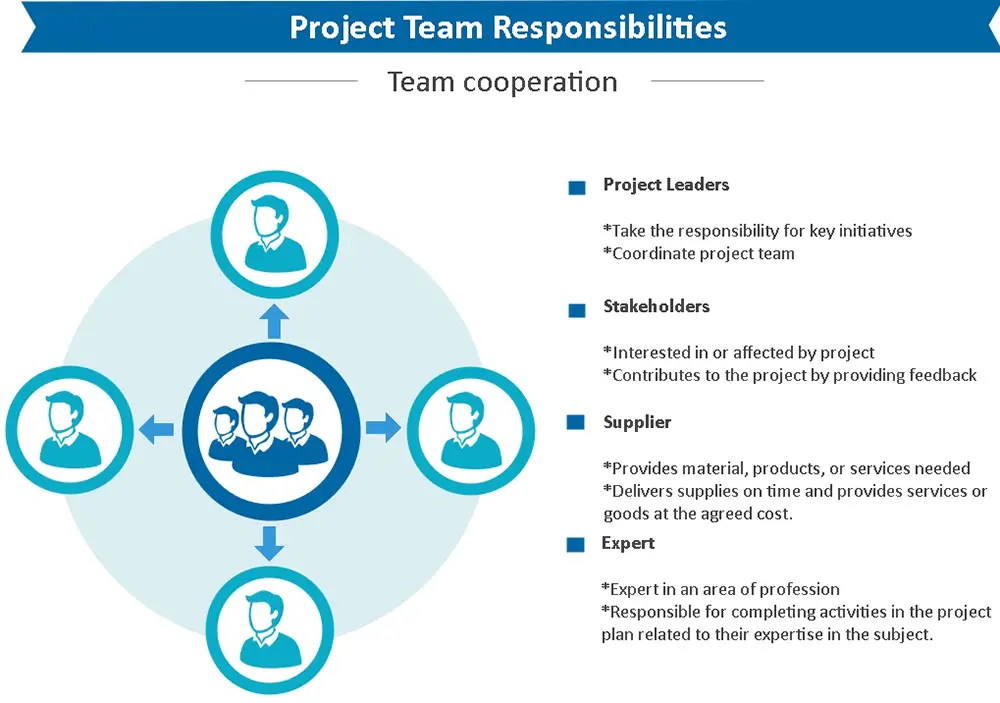
Every e-business initiative should have a primary sponsor or accountable business owner. Many other groups may be interested in the outcome, but someone must provide direction, sponsorship, and decision authority. This role is important because architectural questions often involve trade-offs that cannot be resolved by technical judgment alone.
Project teams typically focus on scope, time, cost, and quality, but in e-business these are only part of the picture. The team must also consider adoption, usability, integration, operational readiness, governance, and the impact on existing business processes. A solution may be delivered on schedule and within budget, yet still fail if it does not fit the organization or meet stakeholder expectations.
This means that project management and architecture are closely related. Project planning determines how work is organized and executed. Architecture determines whether the resulting solution is coherent, scalable, and aligned to business needs. The architect must therefore be attentive not only to the end-state design, but also to the conditions required for successful delivery.
Project management framework
A useful way to think about project management in e-business is as a framework that connects stakeholders, delivery disciplines, and implementation tools. Stakeholders include sponsors, project teams, users, customers, support staff, suppliers, and other affected groups. Delivery disciplines include scope, schedule, cost, quality, risk, communication, coordination, and operational readiness.
The architect does not replace the project manager, but the architect must work closely with project management because architectural decisions shape delivery complexity. If the design depends on multiple integrations, external dependencies, phased migration, or major process change, those realities affect the plan. Likewise, if the project is under severe budget or timeline pressure, those limits affect which architectural options are realistic.
In modern e-business environments, these delivery concerns may also include API integration sequencing, cloud deployment readiness, identity management, observability, testing strategy, and release coordination across distributed teams. The lesson, however, remains the same: architectural success depends on more than design intent. It also depends on disciplined execution.
Questions to ask about the e-business solution
To guide design and prioritization, the architect should ask a series of practical questions about the solution:
- What is the purpose of the e-business solution?
- What financial resources are available for development, licensing, operations, and future change?
- What human resources are available to build, support, and evolve the solution?
- What existing systems, policies, and operational constraints will affect the solution?
- What current or new components can support the design?
- What user interfaces and interaction patterns are required?
- What management information or reporting capabilities are needed?
- What are the expected volume, traffic, or transaction projections?
- What market, customer, or stakeholder research is available?
- What impact will the solution have on the rest of the business?
These questions help reveal both opportunity and risk. They also remind the architect that the design must be evaluated as a whole. A strong interface does not compensate for weak reporting. A scalable infrastructure does not guarantee adoption. A feature-rich solution may still fail if the business is not prepared to operate it effectively.
How these issues interact
The architect’s role becomes more complex because the issues do not stand alone. They influence one another continuously. A decision about scale influences cost. A decision about integration affects delivery risk. A decision about user experience affects support needs. A decision about reporting may require additional data governance and operational discipline.
Consider a simple example. If volume projections show that the solution must handle large traffic spikes, the architecture may require stronger infrastructure, higher availability, additional performance engineering, and more operational monitoring. Those choices increase cost and may reduce the funds available for other priorities such as advanced analytics, content expansion, or custom user features. The architect must therefore judge which investments are essential and which can be phased.
This is why prioritization matters. Not every issue can be solved at once, and not every concern deserves equal weight in every project. The architect must identify the concerns most likely to determine success or failure and address those first.
- Does the design achieve its purpose?
- Is the impact of its introduction understood and accepted by the enterprise as a whole?
These two questions are especially important because they test both strategic alignment and organizational readiness. A solution that does not fulfill its purpose fails by definition. A solution that meets its technical goals but disrupts the business in unplanned ways may also fail, even if the underlying technology is sound.
Key issues and concerns
When considering key concerns and issues, the architect should address first those that are most likely to determine whether the project succeeds or fails. Purpose, stakeholder alignment, business impact, usability, integration, scalability, governance, and operational readiness are often more decisive than cosmetic or secondary features. Strong architecture begins with disciplined prioritization.